

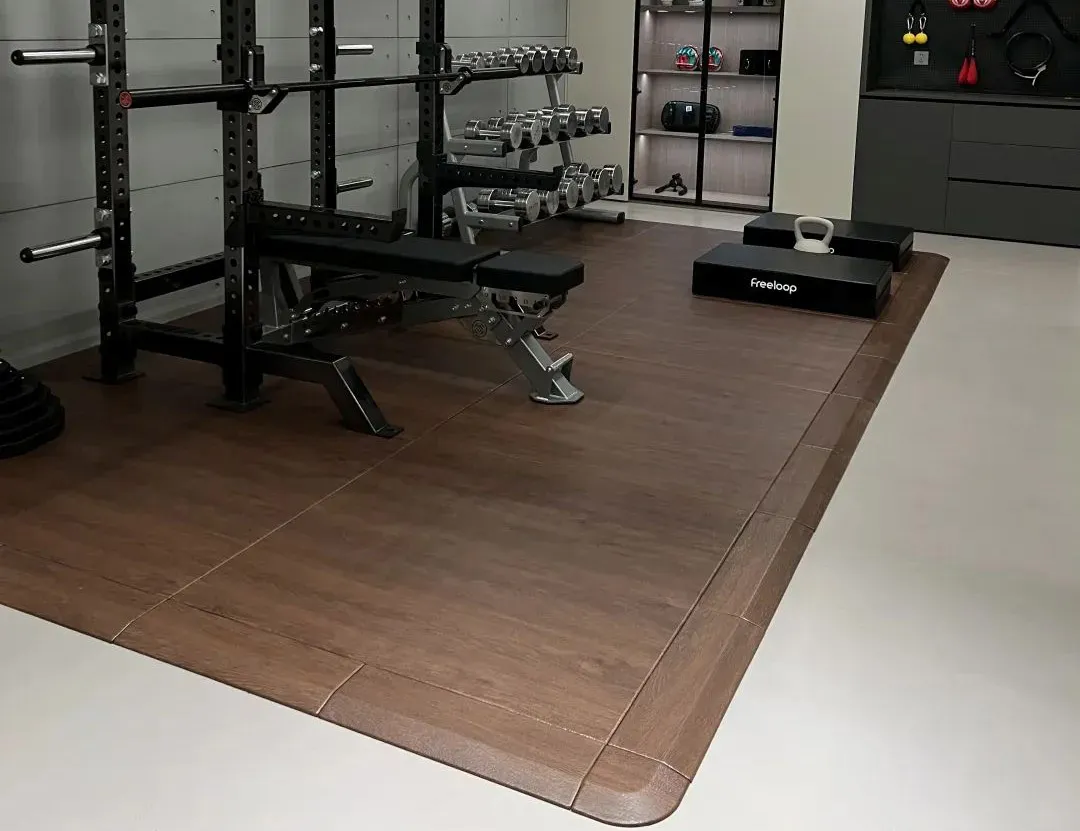
Choosing home gym flooring is a different exercise from specifying a commercial gym. Nobody is planning for ten thousand footsteps a day in a spare room. What you are actually buying is protection for a floor you own — or one you rent — and a quieter relationship with the people living below you.
This guide covers the four decisions that matter: what the floor underneath the mats means for your choice, how thick the tiles need to be for what you lift, why interlocking tiles beat glued-down rolls in a home, and the finishing details that make a corner of a bedroom read as an intentional training space instead of gym equipment parked in a house.
Why home gym flooring is a different product decision
A commercial floor is bought for traffic volume. A home floor is bought for four very specific problems:
- A dropped dumbbell should not crack the tile or dent the hardwood underneath.
- The neighbours downstairs should not hear a barbell being re-racked at 6:40 a.m.
- It has to go down without adhesive, on a floor you may not own.
- It has to look like it belongs in a home.
Point four is not cosmetic vanity. It is the reason most people who start a home corner keep it. A corner that looks temporary gets folded away; a corner that looks finished gets used. That single fact shapes everything below.
Start with the floor you already have
The floor beneath your home gym flooring decides the specification, so identify it first:
- Suspended timber floor. The risks are point loading and vibration. A rack foot or a dropped bell concentrates force onto a small area of board, which either crushes the board or passes the shock to the ceiling below. Spread the load — dense tiles and, for racks, load-spreading plates under the feet.
- Concrete slab. The risks are scuffing, impact marks and noise transfer to the unit below. A slab shrugs off most physical abuse; your neighbours’ ceiling is the more sensitive instrument.
- Tile or stone. The risk is cracking — and no mat will save a poorly bedded tile from a 30 kg drop. Be honest about what you actually drop and where you drop it, and put your thickest coverage under that spot.
Sweep thoroughly before you lay anything. Grit trapped under a mat grinds against the floor finish every time you step on it, and that grinding is slow, silent and cumulative.
How thick should home gym flooring be?
Your home gym flooring thickness should follow what happens in the corner, not the other way round:
| What happens there | Product | Thickness |
| Yoga, mobility, stretching | Composite EPDM Rubber Mats | 15 mm |
| Dumbbells, kettlebells, bands, bodyweight | Composite EPDM Rubber Mats | 15–20 mm |
| Barbell rack, bench, deadlifts | Composite EPDM mats + load spreader under the rack | 20–25 mm |
| Rower, bike, treadmill | EPDM roll under machine feet | 4–8 mm |
Thicker is not automatically better. A soft, thick mat under a squat rack lets the feet sink and rock, which feels worse and is less safe than a firm mat that stays flat. This is a compound question, not a thickness question — hardness is measured on the Shore durometer scale, and the composite mats are specified with a 65±5 Shore A surface layer over a more resilient recycled SBR base, so the surface holds its shape under a static rack load while the base absorbs the drop.
For most home gym flooring projects, 20 mm at 500 × 500 mm is the workhorse. The half-metre tile matters more than people expect: at 20 mm thickness, a one-metre tile weighs well over 15 kg, while a 50 cm tile is a one-person job to carry upstairs, lay and reposition — and it gives you finer control around doorframes and awkward walls.
Why interlocking rubber tiles beat rolls at home
A rubber roll needs adhesive or tape, and a glued floor is a permanent decision made in a room you may not own. Interlocking tiles are held by their own weight and by plastic connectors — 7 × 7 cm snap-lock pins that lock the base joints so the field does not creep when you push a sled or drag a bench across it.
That construction buys three things a homeowner or tenant actually cares about:
- It lifts out. The floor comes up in an afternoon and leaves nothing behind but a clean subfloor.
- It repairs one tile at a time. Drop a kettlebell on an edge and you replace a tile, not a room.
- It moves with you. Renters take it to the next place; owners reconfigure it when the equipment changes.
Where rolls still earn their place at home is under cardio machines, where a thin 4–8 mm layer damps vibration and protects the floor from machine feet. Just remember that a roll is a commitment and a tile is a decision you can reverse.
Keeping the noise down for the neighbours
This is the requirement that gets discovered after installation, so it deserves to be decided before it. Impact noise travels two ways: the airborne bang you hear in the room, and structure-borne vibration that passes through the slab into the ceiling below. Rubber flooring mainly addresses the first. For the second, physics applies: mass, coverage and decoupling — which is what impact insulation class ratings measure in floor assemblies.
What that means practically in a flat:
- Cover the whole corner with home gym flooring, not a small island. A mat under the rack alone lets everything else ring through the floor.
- Put the rack against a load-bearing or exterior wall, not mid-span between beams, where the floor deflects most.
- Add a resilient underlay under the tiles in the weight area if the building is poorly isolated; vibration isolation is a build-up property, not a mat property.
- Lower weights instead of dropping them. A mat buys you tolerance, not immunity. The 6:40 a.m. deadlift set is heard either way.
Finishing touches: edges, corners and the wood-grain trick
An unfinished mat edge is a 20 mm trip lip in a doorway and a permanent reminder that the floor is temporary. Match the home gym flooring tile thickness with beveled transition strips — available in 15, 20, 25 and 30 mm, with corner pieces for right-angle junctions — and the corner stops reading as “equipment on a floor” and starts reading as a room.
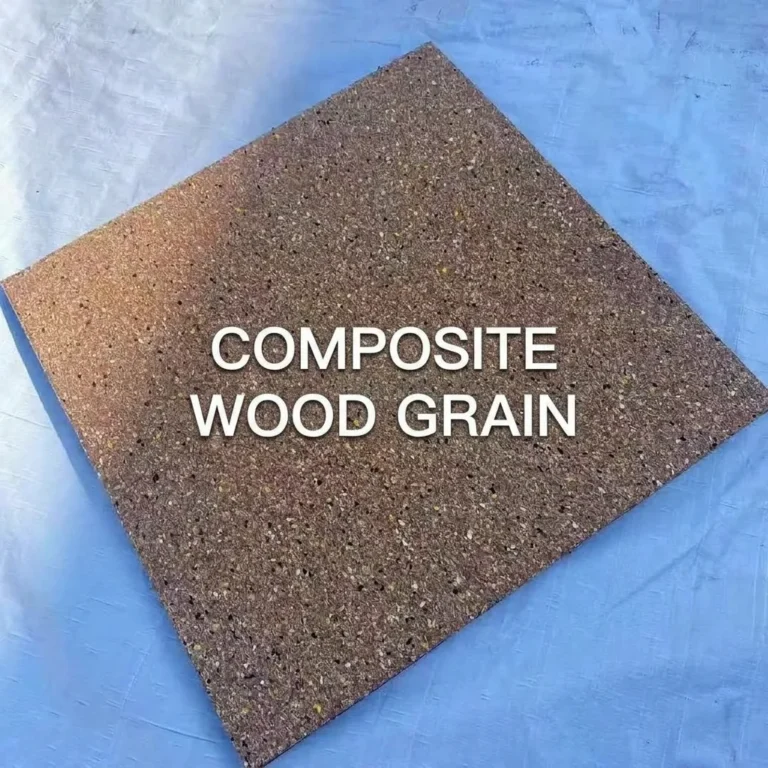
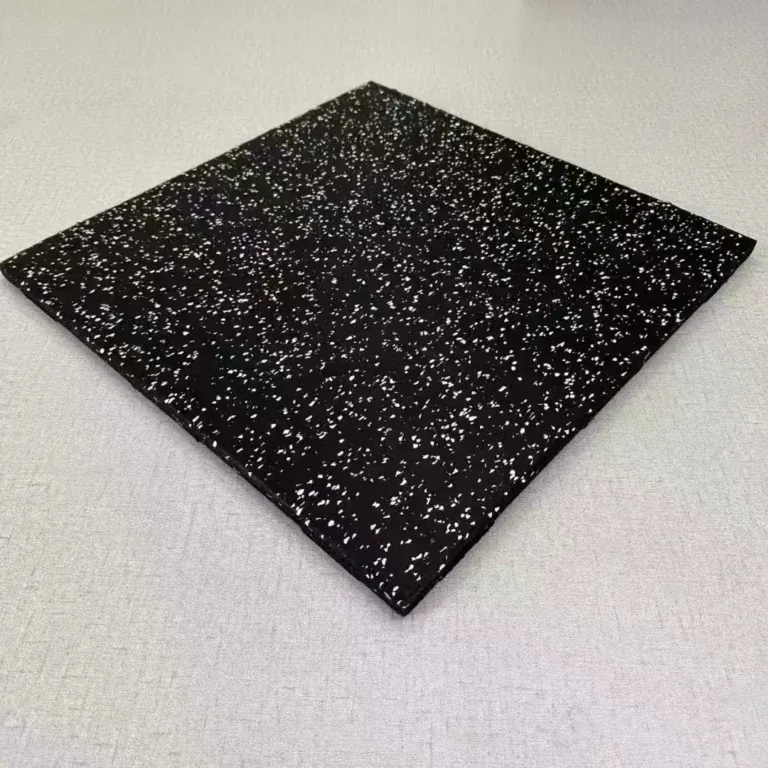
Colour is the other finish that matters. Standard black with flecks is the safe choice — it hides chalk, dust and rubber crumbs. But if the corner shares a room with a bed or a sofa, look at the Multicolor Composite Gym Rubber Tiles, which are available in a wood-grain colourway alongside green, blue, grey and other fleck options. The photograph above is rubber, not timber. In a living space, that single choice is the difference between a spare room with a rack in it and a training corner that belongs there.
FAQ
Will interlocking rubber tiles damage the floor underneath? No. They are loose-laid and held by their own weight plus the connectors — no adhesive, no nails. The one precaution is cleanliness: sweep before laying so trapped grit does not abrade the finish over time.
How thick should home gym flooring be for deadlifts? 20–25 mm in the lifting area, with a load-spreading plate or platform under the bar path. Firmness matters as much as thickness; a dense 20 mm tile that stays flat outperforms a soft 30 mm mat that dishes under the rack feet.
Is home gym flooring loud for downstairs neighbours? Rubber flooring removes most of the high-frequency impact noise. Structure-borne thuds depend on the building, so cover the full corner, place the rack against a load-bearing wall, and lower weights rather than dropping them.
Can I install it myself without tools? Yes. Interlocking tiles press together by hand; a utility knife and straight edge handle cuts around doorways and pipes. Most two-square-metre corners are a one-hour, no-tool job including edge ramps.
What size tiles are easier to work with in a small room? 500 × 500 mm. They are light enough to carry upstairs one-handed, easy to cut around obstacles, and replaceable individually — which matters when the corner shares its home with furniture.
Ready to build your corner?
Measure the space, note what you lift and what is underneath, and send us the dimensions for a factory-direct quotation. MoXing manufactures composite EPDM mats, multicolour interlocking tiles, transition strips and connectors as one matched system — with OEM/ODM colours, thicknesses and sizes for distributors and retailers serving the home fitness market. Browse the full range in the tiles & mats and accessories categories, or learn more about the factory.