
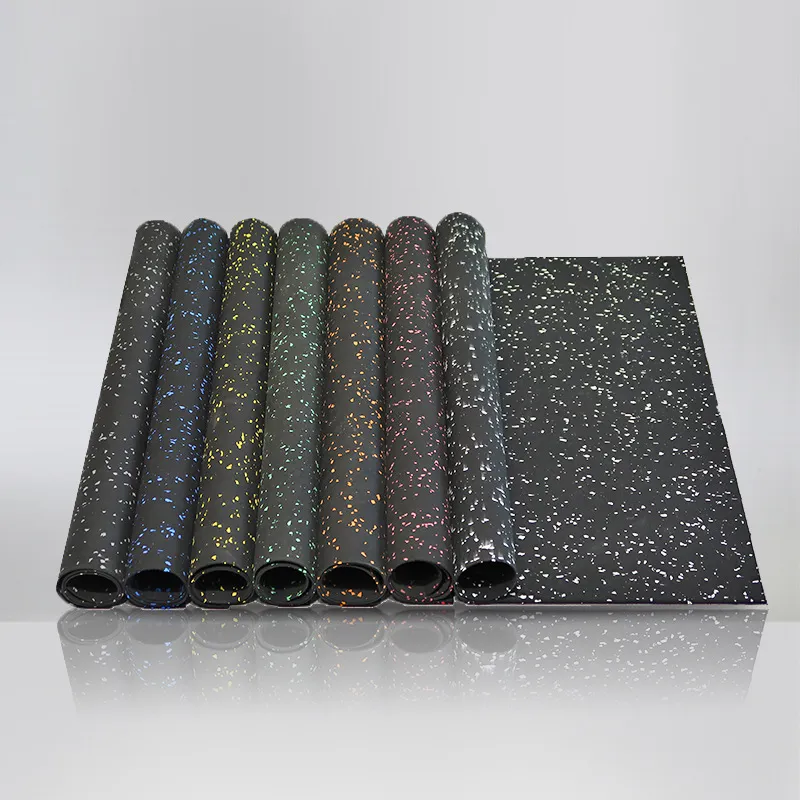
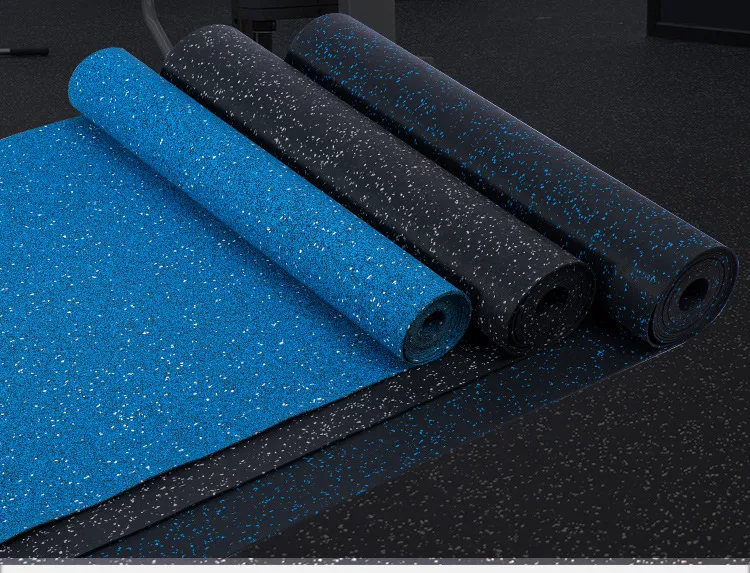
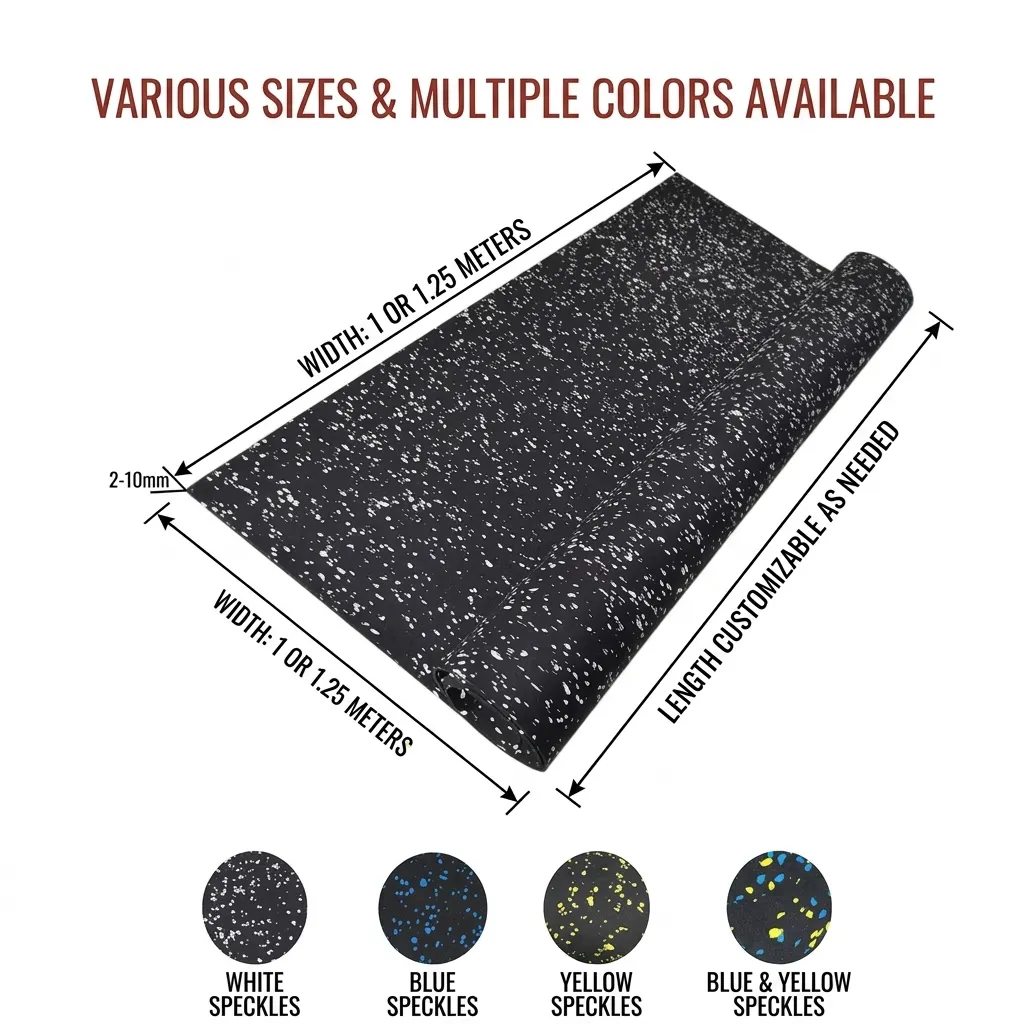
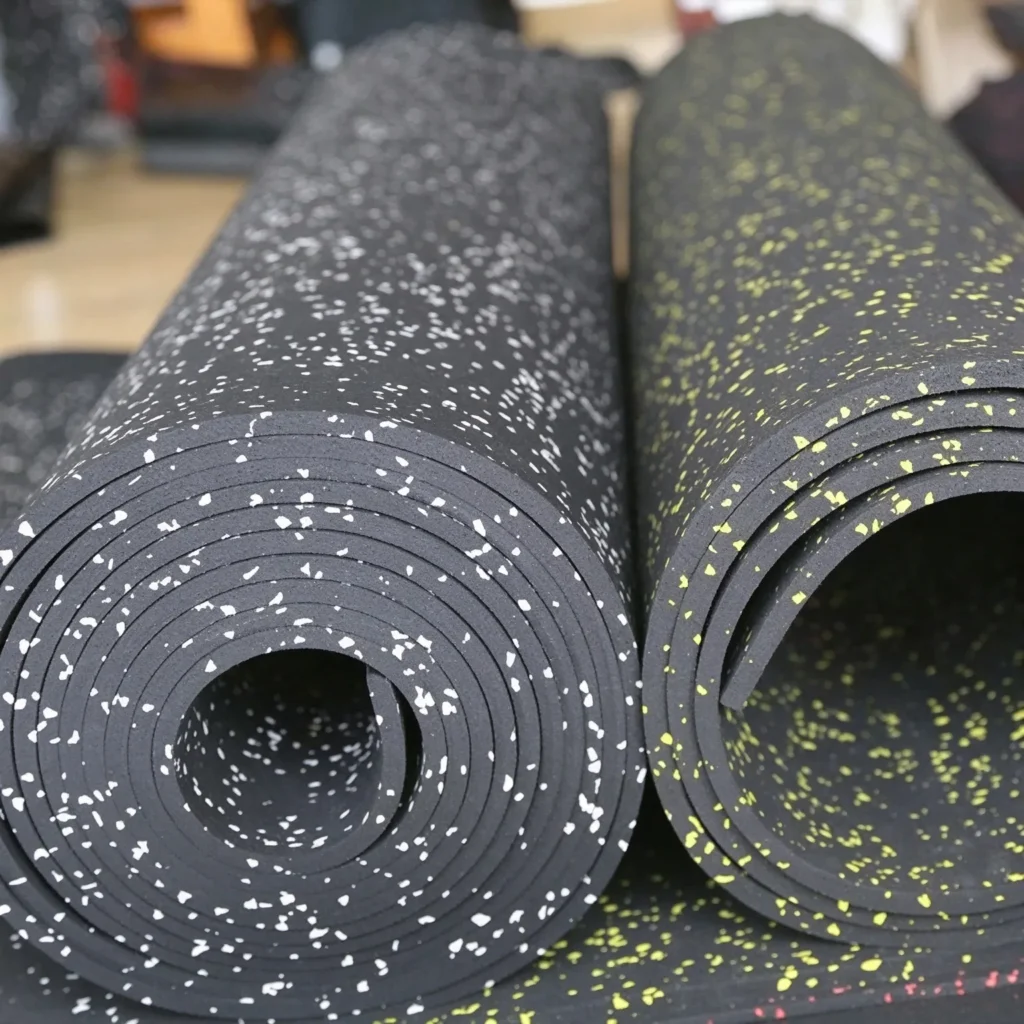
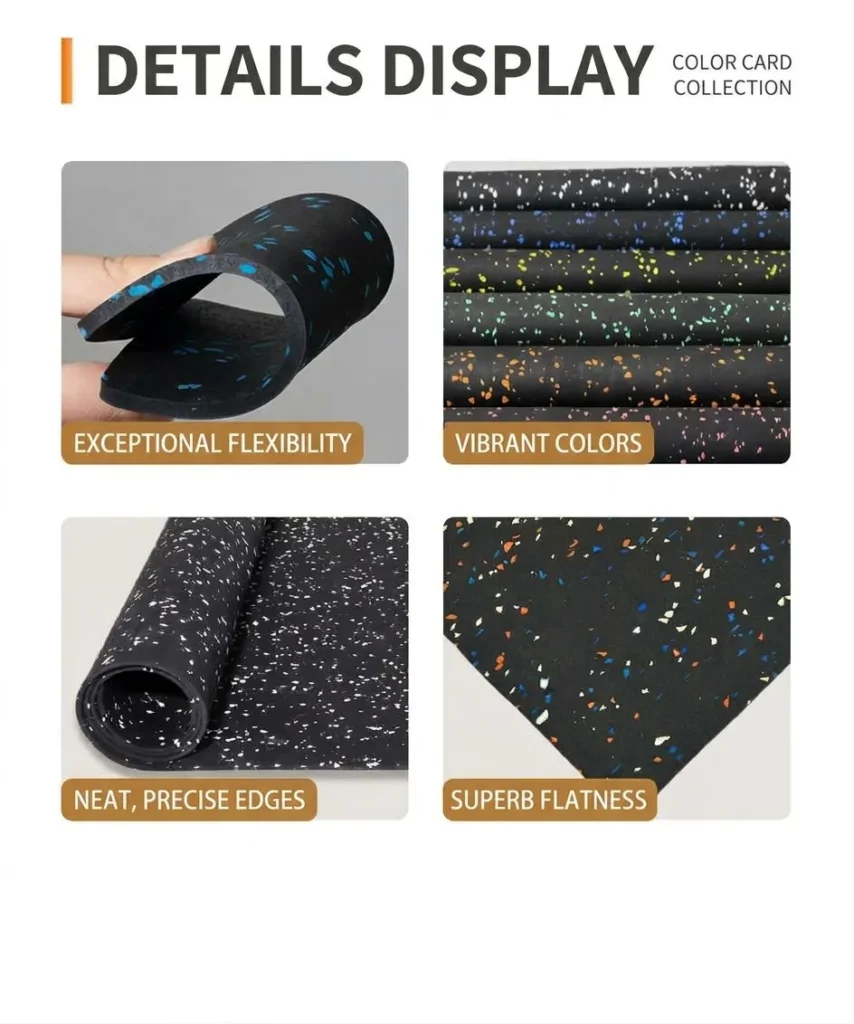
Commercial gym EPDM rubber flooring rolls are what you specify when the floor has to read as one seamless surface: long cardio rows, group-class studios, corridors, and any open plan where a tile grid would fight the architecture. These rolls are produced from EPDM rubber granules with a coloured fleck through the full thickness, so the pattern cannot wear off, and they are supplied in 1.0 m and 1.25 m widths with custom cut lengths to keep site waste low.
Where rolls beat tiles
Rolls remove the single biggest maintenance complaint on a gym floor: seams that open, lift or trap dirt. A 20 m run laid with two rolls has one seam instead of forty, and that seam can be welded or taped flat. On large uninterrupted floors this is faster to install per square metre, cheaper to clean, and quieter under trolley traffic.
Tiles still win where the floor is irregular, where the building is leased, or where the client wants to lift and reuse the surface. If that is your case, composite EPDM rubber mats is the equivalent product in tile format.
Choosing Thickness for Commercial Gym EPDM Rubber Flooring Rolls
| Thickness | Typical use | Notes |
|---|---|---|
| 2–3 mm | Studios, stretching areas, reception, retail | Lays flat over sound substrates, minimal height change |
| 4–5 mm | Cardio rows, selectorised machines, group class | The workhorse gauge for commercial gyms |
| 6–8 mm | Light free weights, functional zones | More mass underfoot, better point-load resistance |
| 10 mm | Heavy-duty and sled areas | For impact and abrasion at the top of the range |
Width, length and how much you actually need
We supply 1.0 m and 1.25 m widths in 10–20 m lengths, and cut to the room dimension on request. Order to the longest wall and plan the layout so seams fall away from main sightlines and doorways. A simple roll plan drawn on the floor plan usually saves 5–10% of material against ordering by square metre alone.
Installation and seam finishing
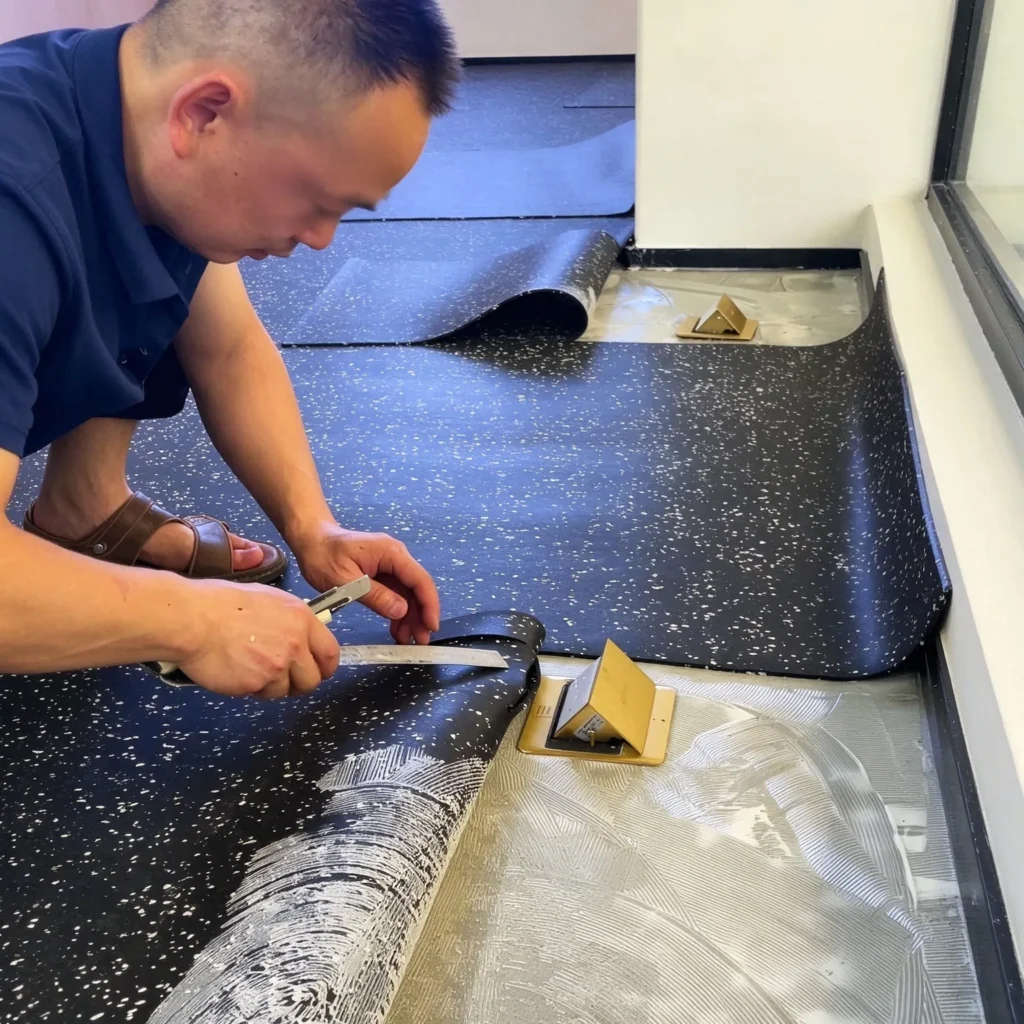
- Rolls should be unrolled and left to relax in the room for at least 24 hours before bonding.
- Bond with a rubber-flooring adhesive applied with the recommended notched trowel, then roll the surface to expel air.
- Butt seams tight, then weld or tape them; a cold weld gives the cleanest, most durable joint.
- Finish perimeters and doorways with rubber flooring transition strips to protect the roll edge from lifting.
Colour flecks and private label supply
Fleck colour is the cheapest way to make a floor look like the client’s own. Standard flecks include white, blue, yellow, green and red, and we mix custom combinations against a brand palette. For importers we supply rolls with private-label wrapping and consolidated containers of rolls, tiles and accessories, which is usually what makes a mixed order viable at container volume.
Frequently asked questions
Can we mix rolls, tiles and edge trims in one container?
Yes. Importers and distributors routinely combine EPDM rolls, tiles and transition trims in a single shipment with custom packaging to optimise container load and landed cost.
Do rolls need a perfectly flat subfloor?
They need a sound, level and dry substrate. Rolls hide small imperfections better than tiles, but any ridge over about 2 mm will telegraph through a thin gauge.
Is the surface slippery when wet?
The granulated EPDM surface has good wet grip. In shower-adjacent or poolside areas, tell us at enquiry stage and we will quote a profile suited to constant wet use.
Send us the floor plan and the training zones and we will return a roll layout, a thickness recommendation and a quotation. The full rubber flooring rolls range is listed separately if you need to compare gauges.
Get a quote from the factory
Need EPDM rolls cut to a specific width or length? Send us your roll sizes and annual volume for a custom-cut quote and sample roll from our Hebei factory. Contact our export team or request a free sample to check the finish before you order.